Short answer
A roll-off is a large open-top container (10 to 40 yards) delivered for a project and hauled away whole when it is full. A front-load is a smaller lidded container (typically 2 to 8 yards) that stays on site and is emptied by a garbage truck on a regular schedule. Rent a roll-off for remodels, cleanouts and builds; set up front-load service for everyday business trash.
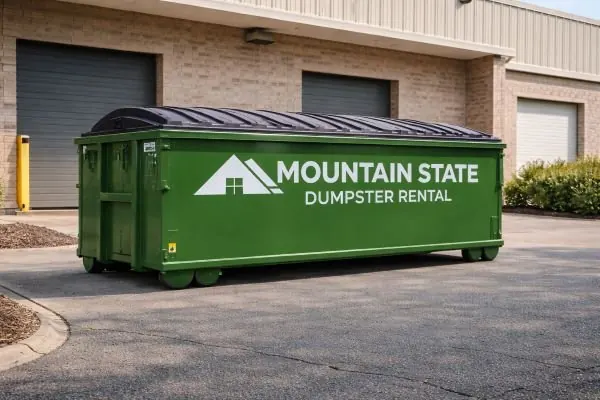
The basic difference
The difference between a roll-off and a front-load dumpster comes down to how each is moved and emptied. A roll-off is an open-top rectangular container that a specialized truck slides onto the ground and later pulls back up and drives away to be emptied at a landfill or transfer station. A front-load is a smaller lidded container that stays where it is; a garbage truck lifts it with forks on the front of the cab, tips it over the cab into the truck body, and sets it back down.
Side-by-side comparison
| Roll-off | Front-load | |
|---|---|---|
| Typical sizes | 10, 15, 20, 30, 40 cubic yards | About 2 to 8 cubic yards |
| Top | Open, tarped for transport | Hinged plastic or metal lids |
| How it is emptied | Hauled away whole and emptied off site | Lifted and emptied into a truck on site |
| Billing | Flat rental for size and days, with a weight allowance | Ongoing service by size and pickup frequency |
| Typical term | Days to weeks | Months to years |
| Best for | Remodels, cleanouts, roofing, construction | Restaurant, retail, office and apartment trash |
| Loading | Over the side or through a rear door | Bags through the lids |
| Space needed | Long, straight approach for the truck | Small pad, often in an enclosure |
When a roll-off is the answer
Choose a roll-off when the waste comes from a project with a start and an end:
- Home remodels, reroofs and cleanouts.
- Construction and demolition.
- Commercial tenant finishes, store resets and closures.
- Property turnovers and estate cleanouts.
- Yard waste after storms or mitigation work.
Roll-offs take bulky and heavy debris that would never fit through a lid, and the large sizes handle a whole project in one or two hauls. The sizes are explained on the 10-yard, 20-yard and 40-yard pages, among others. Mountain State Dumpster Rental lines up roll-offs from independent local haulers across Colorado's Front Range.
When a front-load is the answer
Choose a front-load when the waste never stops:
- Restaurants and cafes producing bagged food waste and packaging daily.
- Retail stores with steady cardboard and trash.
- Offices, medical buildings and schools.
- Apartment and condo communities.
- Churches, gyms and other facilities with regular trash.
Front-load service keeps a bin on a pad or in an enclosure and empties it on a set schedule, from once a week to several times a week. Recycling and compost bins often sit beside it. If you need ongoing service, we can point you toward a provider, but the agreement itself is between you and that company.
Mixing both
Plenty of businesses use both at different times. A restaurant with daily front-load service brings in a 20-yard roll-off when it renovates its dining room. An apartment complex with front-load bins rents a roll-off for unit turnovers. A store with regular service uses a 40-yard roll-off for a reset. Planning those projects separately from the everyday service avoids overflowing the regular bins and paying for extra pickups.
Placement differences
A roll-off needs a long, straight approach, firm ground and overhead clearance for a tilting truck bed. It occupies about two or three parking spaces on a commercial lot and may need a city permit if it sits on the street.
A front-load needs a smaller, level pad where a front-load truck can drive straight at it. Many cities and HOAs require enclosures for permanent containers. Lids should close to keep out wildlife, which matters in parts of Colorado where bears and raccoons visit dumpsters.
Contracts and fine print
Roll-off rentals are straightforward: size, days, tons included, overage rate and surcharges. Front-load service agreements deserve a closer read. Look at the term length, automatic renewal, notice period for cancellation, price increase clauses, fuel and environmental fees, and charges for extra pickups or overfilled bins.
Questions to ask yourself
If you are still unsure, run through these:
- Does the waste have an end date? If yes, a roll-off. If no, front-load service.
- Is the debris bulky or heavy? Drywall, lumber, furniture, roofing and concrete need a roll-off; bagged trash suits a front-load.
- How much space is there? A roll-off needs a long, straight approach for the truck. A front-load needs a small pad the truck can drive straight at.
- Who loads it? Crews and homeowners throwing debris over the side need an open top. Staff carrying bags out the back door need lids.
- How long will it stay? Days or weeks points to a roll-off rental. Months or years points to a service agreement.
Most people answer the first question and already know. The rest help when a project and ongoing waste overlap, such as a restaurant staying open during a remodel, where both containers may sit on the same lot for a while.
Which do you need?
If you can name the day the waste stops, you need a roll-off. If you cannot, you need front-load service. Call (720) 780-0365 to line up a roll-off, see commercial dumpster rental for business projects, or the industries served page for the sectors we hear from most.