Roll-off dumpsters in one answer
Roll-off dumpster rental means a hauler delivers an open-top container in a chosen size, you fill it over an agreed rental period, and the hauler takes it away for disposal, billing a flat price that includes a weight allowance. Along the Front Range the standard sizes are 10, 15, 20, 30 and 40 cubic yards. Mountain State Dumpster Rental is a referral service: call (720) 780-0365 and we line up an independent local hauler for your address, size and dates.
How the truck sets it down
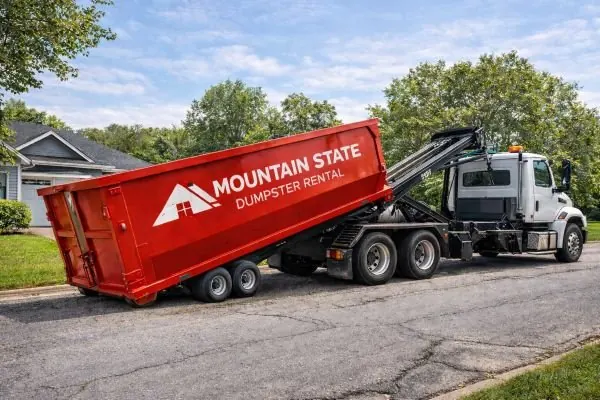
Roll-off trucks use either a hook-lift arm or a cable winch. Both tilt the truck bed so the container slides down its rails and onto the ground behind the truck. That has three practical consequences. The truck needs a straight approach, typically something like 60 feet of combined truck and container length. It needs vertical clearance when the bed tilts, so low branches, wires and gutters matter. And the ground must be firm: a loaded container rests on steel rails and small wheels that can mark asphalt or crack thin concrete. Boards under the rails help.
Choosing a size
Size is the first decision and the one that most affects the bill. The site's size pages go deep on each: 10-yard for heavy debris, 15-yard for one large room, 20-yard for reroofs and remodels, 30-yard for additions and big cleanouts, and 40-yard for bulky commercial waste. If you are unsure, the size guide matches common projects to containers.
How a roll-off is billed
Most Colorado haulers quote a flat price for a size and a rental period. That price includes delivery, pickup, disposal and a set number of tons. When the container goes back, it is weighed. If the load is under the allowance, the flat price stands. If it is over, you pay a per-ton overage. Extra days, items with special handling and a relocation can also add charges. Typical market ranges, with their source, are on the Colorado pricing page.
Filling it the right way
Load flat, heavy items first through the rear door, break down furniture, and keep everything below the top rim so the driver can tarp and haul legally. Colorado law requires loads on the road to be secured, and an overfilled container can be refused at pickup until the excess is removed. Keep prohibited items out entirely; the prohibited items guide covers what haulers reject.